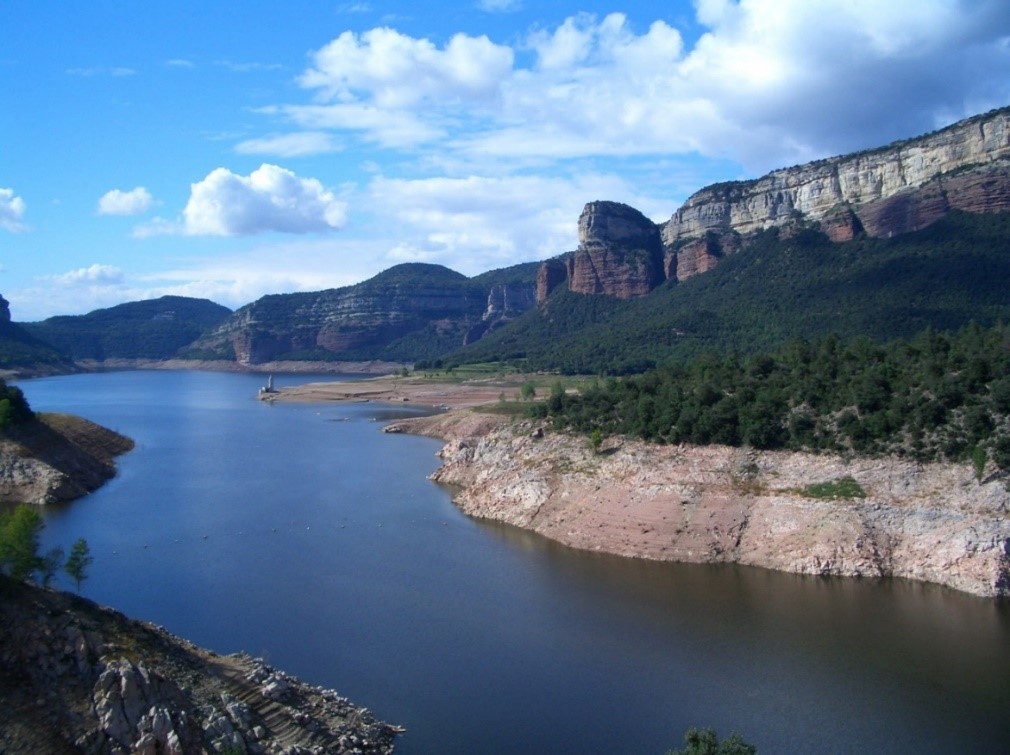

The Sau Reservoir (Pantà de Sau), in Catalonia, is one of the lakes analysed in the study. | Quico Llach
Plastics and microplastics have invaded lakes and reservoirs on a global scale. Pollution caused by this debris affects even the most remote places, where human impact is minimal. A new study published today in Nature shows, for the first time, that in some cases concentrations of plastic found in freshwater environments are higher than those found in plastic islands in the ocean, so-called ‘garbage patches’.
The research, led by the University of Milano-Bicocca, includes the participation of the National Museum of Natural Sciences (MNCN-CSIC) and the Institute for Environmental Assessment and Water Research (IDAEA-CSIC), both of the Higher Council for Scientific Research (CSIC).
“Lakes are like sentinels of pollution, since they end up accumulating plastic waste that is dispersed through various sources such as reservoirs or the atmosphere. In addition, once they reach their waters, the lakes can retain, modify and transport plastic waste through the hydrographic basins towards the oceans”, contextualizes the IDAEA-CSIC researcher, Miguel Cañedo-Argüelles, one of the authors of the study.
Nota de prensa (ESP)
Nota de premsa (CAT)
Veronica Nava et al. (2023) Plastic debris in lakes and reservoirs. Nature. DOI: 10.1038/s41586-023-06168-4