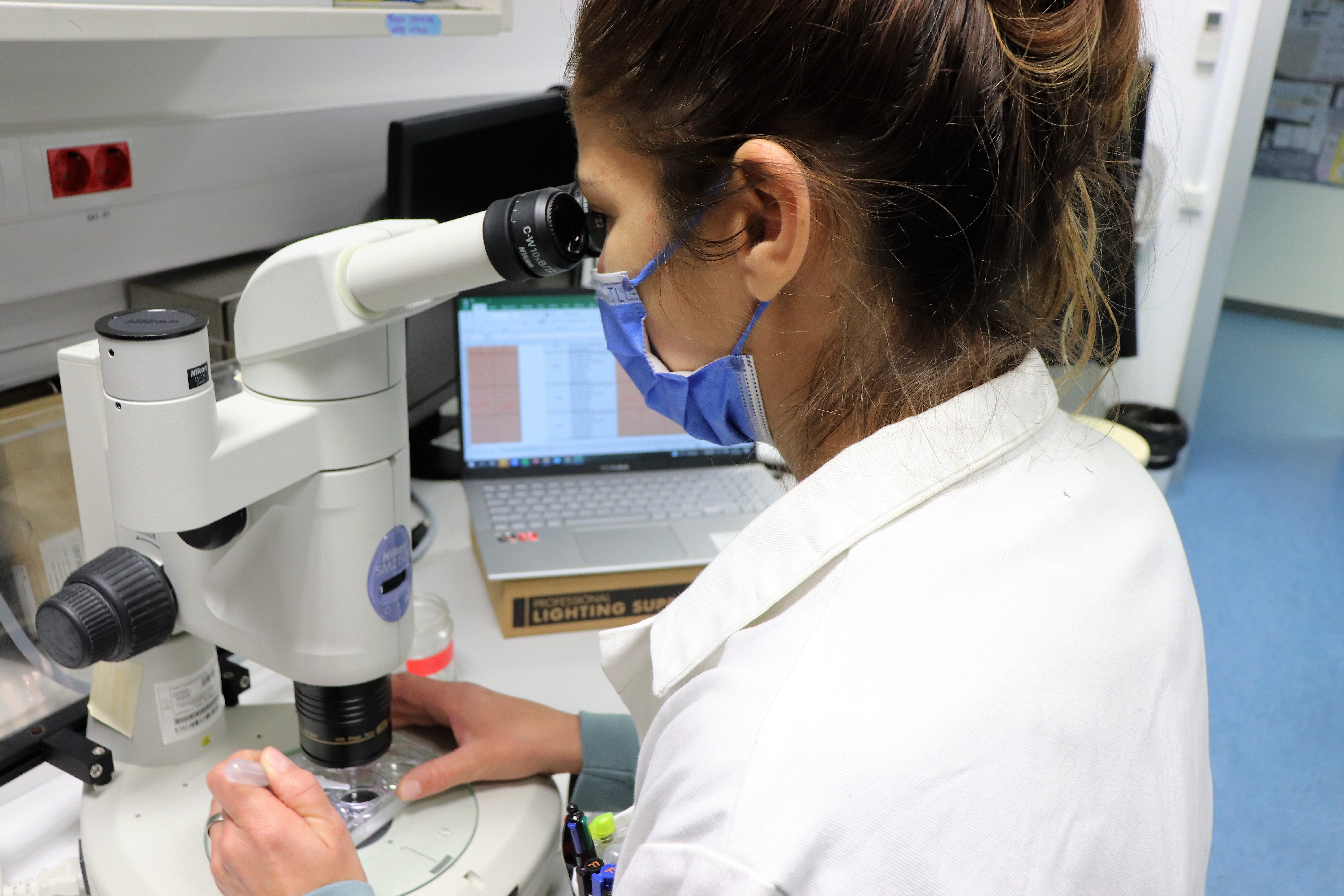

Researchers from the Environmental Toxicology group at IDAEA, together with the Institute for Advanced Chemistry of Catalonia (IQAC) have described that only 24 hours of exposure to the carbaryl insecticide produce harmful effects in zebrafish larvae, a laboratory model organism used in research due to the similarity of its nervous system to that of humans. Even at concentrations 35,000 times lower than the current safety levels, this insecticide seriously affects the behavior of these organisms, compromising their survival.
“The results of this work imply that the current safe levels of this insecticide in water are actually of high risk for fish larvae”, explains the main author of the study, Demetrio Raldúa. “This work raises alarm regarding its impact on humans and shows the need to re-evaluate this insecticide.”
The reason why these concentrations affect their behavior lies in a mechanism unknown to date. The insecticide blocks the adrenaline and serotonin receptors, two key neurotransmitters for the correct functioning of the nervous system.
Nota de prensa (ESP)
Nota de premsa (CAT)
This work is part of the COGNITOX project, which aims to identify hazardous neuroactive chemicals in real environmental samples using the existing behavioural toolbox implemented with new behavioural assays to detect an extensive number of neuroactive chemicals.