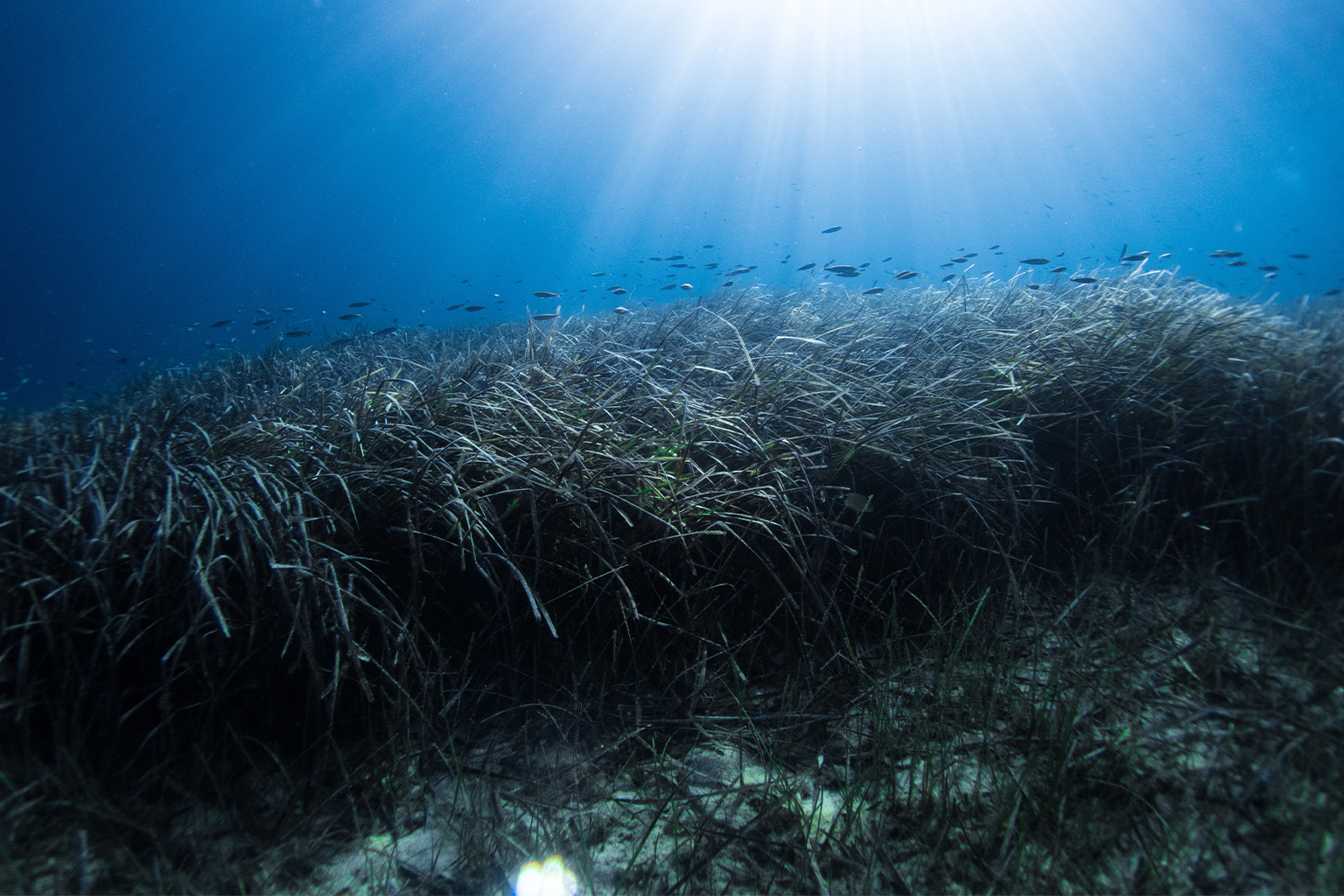
Researchers Sílvia Díaz Cruz and Adrià Sunyer, from the ENFOCHEM group, have participated in a study that shows that the Mediterranean seagrass Posidonia oceanica accumulates UV filters. The study consisted of sampling the seagrass at three different sites on the Mediterranean island of Mallorca: at the port of the capital Palma, near the port of Alcudia, and at Ses Salines, a “pristine” site with fewer tourists than the others. The research team found varying mixtures and concentrations of the sunscreen components oxybenzone, avobenzone, 4-methylbenzylidene camphor, benzophenone-4, and methyl parabens, which are UV filters.
Díaz-Cruz expressed her concern about the findings, published in March in the Marine Pollution Bulletin journal. UV filters are already known to accumulate in a variety of aquatic species, such as dolphins, sea turtles, fish and mussels, and can cause harm, including birth defects and reduced fertility, as well as damage to coral reefs.
“We have used the capacity of Posidonia meadows to accumulate trace-metal as a bioindicator of the contamination of seawater”, said Díaz-Cruz.
Scientists have yet to study how the UV filters found accumulating in P. oceanica might affect seagrass. These findings could be of concern if a real impact on the health of the meadow is demonstrated, but accumulation does not necessarily indicate harm.
The findings indicate a wider pollution problem. The contamination is likely to be coming from wastewater treatment plants in the port areas. Rhizomes from the two port sites had the highest concentration of all sunscreen UV blockers. Treated wastewater can include a host of other pollutants known to impair marine life, including pharmaceuticals, microplastics and caffeine. Other sources of the UV filters are direct contamination from swimmers and, potentially, beach showers.
Full research article
Text at Mongabay news platform

The seagrass Posidonia oceanica accumulates a range of UV filters commonly used in sunscreen and other cosmetics. Whether this is harmful to the species has yet to be determined. Image by Ben Jones/Ocean Image Bank.
IDAEA-CSIC Communication