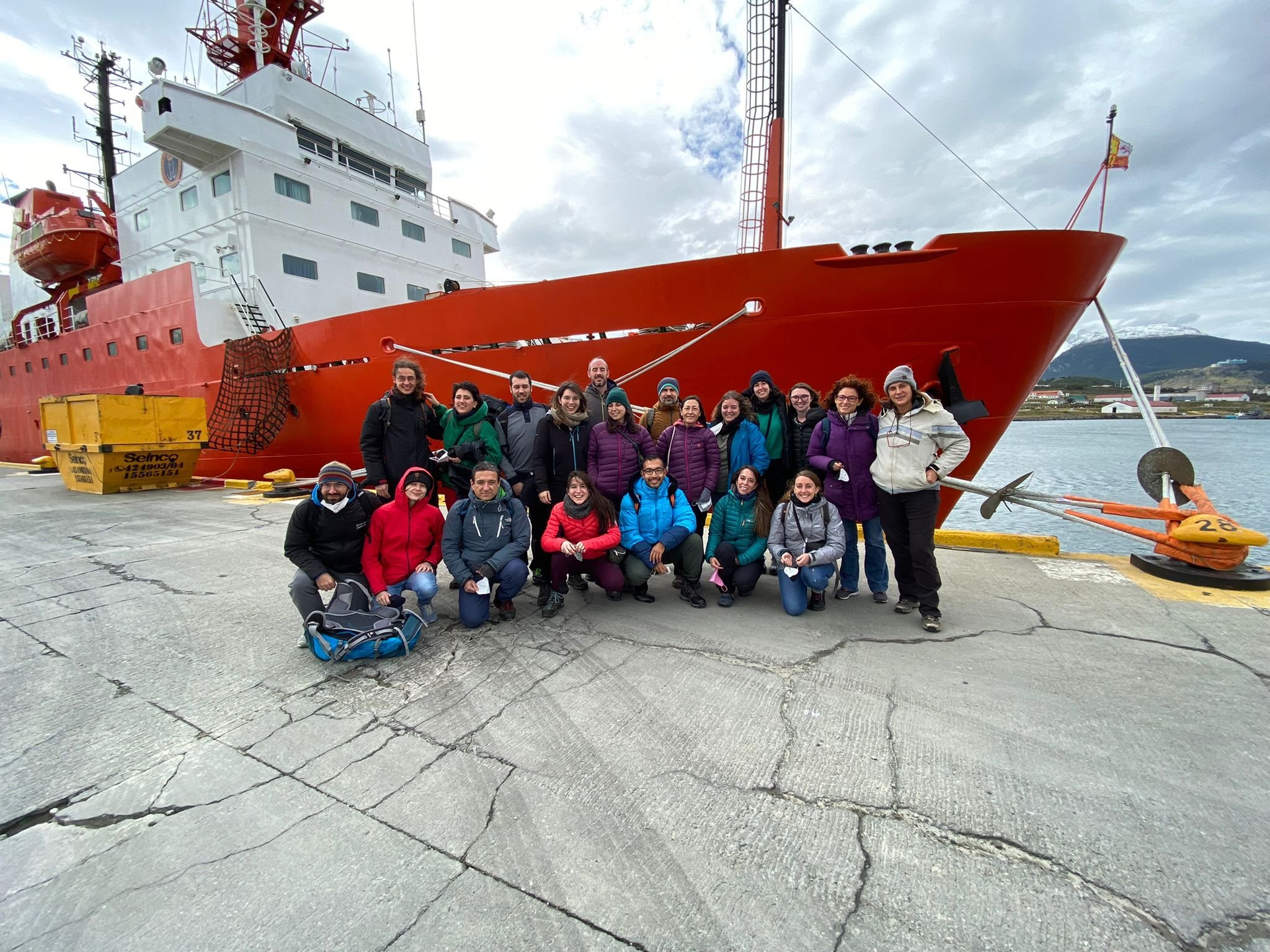

The Institute of Environmental Assessment and Water Research (IDAEA-CSIC), together with the Institute of Marine Sciences (ICM-CSIC), the Institute of General Organic Chemistry (IQOG-CSIC), and the University of Vigo today begin the expedition ANTOM- II in the Southern Ocean to analyze the impact of emerging pollutants and semi-volatile organic compounds of human origin.
The expedition departs from Ushuaia (Argentina) to the Bellinghausen Sea, in Antarctica, in the Oceanographic Research Ship “Hesperides”. In the next month, researchers will focus on analyzing the potential of Antarctic marine microorganisms to degrade these contaminants of human origin.
“We want to know the effects of organic matter of human origin on the microbial communities of Antarctica. We will also evaluate the ability of bacteria to degrade these pollutants”, explains the IDAEA-CSIC researcher and project coordinator, Jordi Dachs.
This project is a continuation of the study that began in December 2020, when the ANTOM-I expedition departed from Vigo to Punta Arenas (Chile). This expedition collected air and water samples in the Atlantic Ocean to determine how chemical pollutants were transported to the Southern Ocean.
Nota de prensa (ESP)
Nota de premsa (CAT)
IDAEA-CSIC Communication