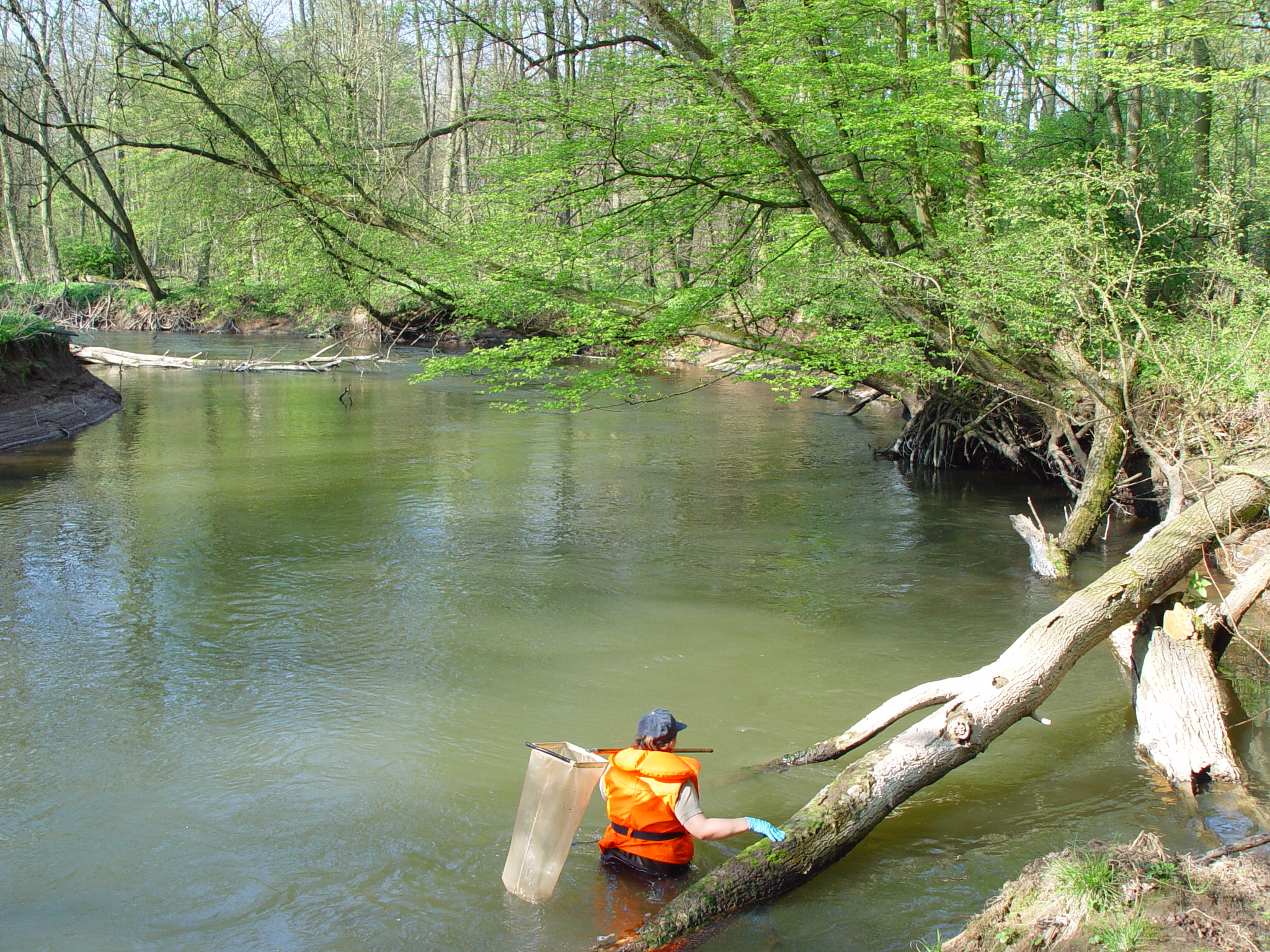

More than 26000 samples of almost 2700 species were analysed by the research team. | Photo: Senckenberg
The IDAEA researcher Miguel Cañedo-Argüelles has participated in a study, coordinated by the Senckenberg Research Institute in Germany, in collaboration with a large international team, examining the state and development of invertebrate biodiversity in European inland waters in the renowned journal Nature.
In their study, published yesterday, they show that biodiversity in river systems from 22 European countries has increased significantly over a period from 1968 to 2020. However, the team of scientists warns that this positive trend has stagnated since 2010 and that many river systems have not been able to fully regenerate. Therefore, they call for additional measures to revive the recovery of biodiversity in inland waters – freshwater ecosystems that continue to be exposed to severe pressures such as pollution, invasive species, and climate change.
Mayflies, stoneflies, and caddisflies are among the diverse group of invertebrates that spend a large part of their lives in the water as larvae.

Invertebrates, such as this mayfly are important indicators for monitoring water quality. Photo: Senckenberg
“All these invertabrates decompose organic matter, filter water, and transport nutrients between aquatic and terrestrial environments. Such invertebrates have long been a cornerstone of water quality monitoring”, explains the study’s first author, Peter Haase of the Senckenberg Research Institute. “This monitoring is immensely important because rivers and lakes are subject to major anthropogenic pressures and are among the ecosystems most threatened by biodiversity loss.”
Inland waters are exposed to various anthropogenic pressures from agricultural and urban land use. They accumulate pollutants, organically contaminated runoff, fine sediments, and pesticides. These ecosystems are further threatened by changes such as dams, water withdrawal, invasive species, and climate change.
Together with a large international team, Haase and Welti analyzed a comprehensive dataset of 1,816-time series collected between 1968 and 2020 in river systems in 22 European countries, comprising 714,698 individuals of 2,648 taxa from 26,668 samples. The analyses show significant increases in biodiversity over the 53-year period. The number of unique taxa increased 0.73 percent per year, the number of groups of taxa performing different ecological roles increased 2.4 percent per year, and total abundance of invertebrates increased 1.17 percent per year.
“However, these increases occurred mainly prior to 2010 and, unfortunately, biodiversity has remained at more or less constant levels since then. While the increases in biodiversity in the 1990s and 2000s likely reflect the effectiveness of water quality improvements and restoration projects, the stagnant trend that followed suggests that past actions have been exhausted,” adds Haase.
Haase, P., D.E. Bowler, N.J. Baker, et al. (2023) The recovery of European freshwater biodiversity has come to a halt. Nature, 620 (7974). DOI: 10.1038/s41586-023-06400-1